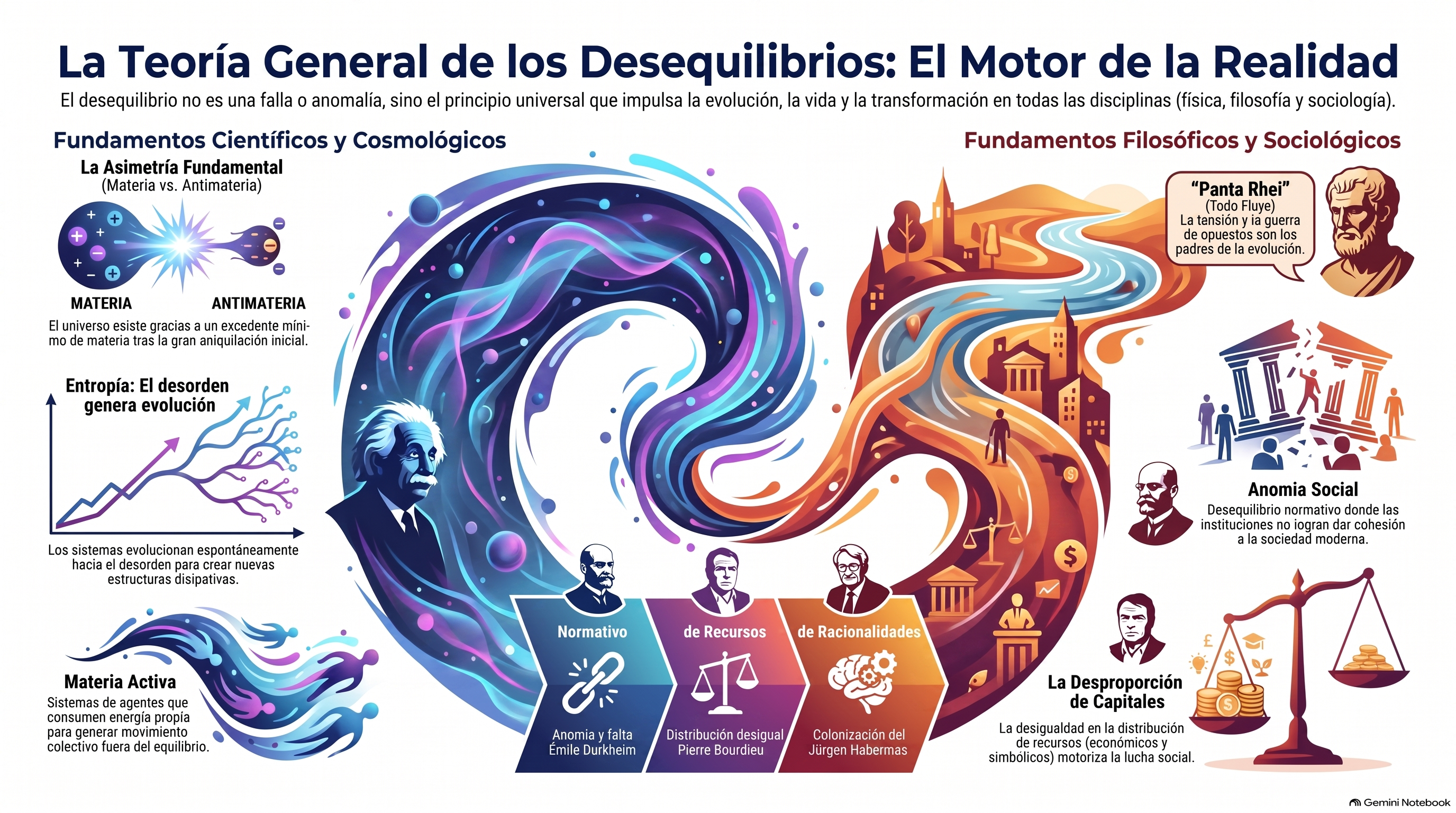
I. DISEQUILIBRIUM AS A UNIVERSAL PRINCIPLE
Motion as the Essence of the Universe Since antiquity, numerous thinkers observed that reality is characterized by permanent change. The motion of celestial bodies, biological growth, social transformations, and economic variations show that nothing remains identical to itself. This phenomenon can be appreciated in two ways:
- In a static state of the behavior of variables at a positional point.
- Through the appreciation of the behavior of variables over time.
In some sciences, the static view is usually associated with the expression of a steady state where dynamics can bend both position and trend. In the temporal view, the appreciation of behavior is shown and rationalized through statistical formulas according to the type of behavior, such as the simple arithmetic mean, compound mean, median, chained medians, etc.
Disequilibrium constitutes precisely the effect of motion. When a system loses stability (considering that absolute equilibrium does not exist), or when activities and events constantly emerge from forces driving new configurations, then imbalances (disequilibria) are expressed, which are the effects of behavioral changes in the sense of equality. The universe evolves through deviations, tensions, and reorganizations, which are expressed in various formulas within each science.
The General Theory of Disequilibria (GTD) holds that:
- Every dynamic system is subjected to disequilibrating forces.
- Absolute equilibrium is impossible to achieve within systems that express the reality of the universe. The universe is expressed in the whole and the parts in unequal behaviors and with sequences of different types after the fulfillment of temporarily established cycles or orders.
- Disequilibrium generates evolution, adaptation, and transformation. Biological death and the change of functionalities of many matters are the sign and birth of others with different dynamics.
- Crises and catastrophes are mechanisms of different types of reordering of matter, forces, and energies, which reorganize among themselves.
- Time continuously and unstoppably deepens the divergences and complexities of the transformations of the aforementioned expressions. It represents a Whole in which we only see visible parts, while others remain outside our view or rationality.
- In time, everything is expressed as past, present, and future. The past is rationalized through the partitioning of the expression of realities in time into centuries, years, etc. The present is a fleeting moment of time that manifests permanently and generates the accumulation of realities in the past. The beginning of the past is an inexact measure, only appreciable as a reference of known and unknown time. The visible field in its magnitude is known as observable space. Space cannot be defined with absolute accuracy, but as known and unknown. The behaviors of the field have been described by various scientists, achieving increasingly enriching appreciations of its components and dynamics.
The Analysis of Space and Time The analysis of space and time has been one of the most important intellectual journeys in history, led primarily by Isaac Newton, Albert Einstein, and Hermann Minkowski. While early thinkers viewed them as separate and absolute entities, modern physics demonstrated that they are united in a dynamic four-dimensional fabric called space-time.
Below are the key scientists who revolutionized our understanding of the cosmos:
- Albert Einstein
- Isaac Newton
- Hermann Minkowski
- Galileo Galilei
- James Clerk Maxwell
- Stephen Hawking
Evolution of the Concept To easily understand how the perspective of the universe changed, we can compare the thought of the two pillars of physics:
| Characteristic | Isaac Newton’s Model (Classical Physics) | Albert Einstein’s Model (Modern Physics) |
|---|---|---|
| Nature of Time | Absolute. Flows equally for everyone in the universe. | Relative. Depends on speed and gravity. |
| Nature of Space | Fixed. A rigid and independent stage. | Flexible. Deforms and stretches in the presence of mass. |
| Mutual Relationship | Conceived as separate, independent absolute entities. | Woven together into a dynamic four-dimensional fabric. |
The Four Dimensions of Space-Time The four dimensions of space-time in modern physics are composed of three spatial dimensions and one temporal dimension, which serve to locate any event in the universe.
The Three Dimensions of Space:
- Height (Z-axis): Measures the height or vertical position of an object.
- Width (X-axis): Measures the distance from left to right or the width.
- Depth (Y-axis): Measures the distance from front to back or the length.
The Dimension of Time:
- Time (T-axis): Indicates the exact moment at which an event occurs and how spatial positions change as seconds elapse.
The explanations of space-time have been expanded with the analysis of cosmological space and time, the insights of which will be presented later in this book. Under this approach, we have evolved so far within a framework of knowledge of the movements of physics and other sciences. In each science, space and time have dimensions, spaces, and times of diverse manifestations that contribute to the richness of disequilibrium. This represents a growing evolution as the observable space has been enriched. Where disequilibrium represents the richness of knowledge and the expression of dynamics, and equilibrium is a possibility of expression only appreciable in a static position and without the evolution of time. It is for this reason that the richness of sciences rests on the perpetual state of disequilibrium, which will never cease in its eternal evolutions and involutions.
- Non-linear dynamics amplify small perturbations, generating different non-linear and random dimensions. In this way, disequilibrium ceases to be interpreted as an anomaly or a pathology, becoming instead the structural foundation of becoming.
2. Aristóteles (384 A.C. – 322 A.C.)
II. PHILOSOPHICAL FOUNDATIONS OF DISEQUILIBRIUM
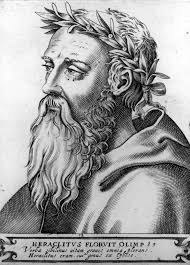
- Heraclitus of Ephesus (535 BC – 475 BC) Heraclitus was possibly the first great philosopher of dynamic disequilibrium. His famous assertion «everything flows» (panta rhei) expressed that reality is in permanent transformation.
For Heraclitus:
- Conflict is the father of all things.
- War and tension generate evolution.
- The universe is sustained through oppositions.
- Stability is apparent.
His conception subsequently anticipated:
- Dialectics.
- Dynamic systems theory.
- Chaos theory.
- Evolutionary conceptions.
Historical Impact: Heraclitus’s influence was decisive on Hegel, Nietzsche, Marx, and numerous contemporary thinkers of complexity.
- Aristotle (384 BC – 322 BC) Although Aristotle developed a more ordering vision of the universe, he introduced fundamental concepts related to motion and change. His theory of potentiality and actuality (potentia and actus) implied that all reality contains latent possibilities for transformation.
Contributions:
- Causal explanation of motion.
- Idea of continuous transformation.
- Relationship between form, matter, and change.
Influence: His thought dominated the natural sciences and medieval philosophy for centuries.
- Niccolò Machiavelli (1469 – 1527) Machiavelli introduced the analysis of political disequilibrium. He argued that:
- Power is unstable.
- States go through cycles of rise, decline, and can even disappear.
- Conflict constitutes an inevitable dimension of politics.
He was a precursor of modern political realism and systemic analyses of power.
- Thomas Hobbes (1588 – 1679) Hobbes considered that natural society is in permanent conflict. The struggle for power and survival constitutes a state of continuous disequilibrium.
Contributions:
- Theory of structural conflict.
- Instability of human relationships.
- Need for regulatory structures.
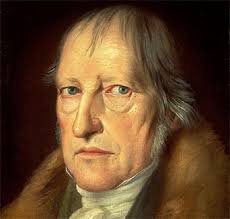
- Georg Wilhelm Friedrich Hegel (1770 – 1831) Hegel formulated historical dialectics. According to his conception:
- All reality contains internal contradictions.
- Contradictions generate sublation (superaciones / Aufhebung).
- History advances through constant tensions that generate new structures and states.
Hegelian dialectics represents a philosophical theory of evolutionary disequilibrium.
Impact: It deeply influenced Marx, Engels, the formulation of historical sociology, and critical theory.
- Jürgen Habermas (1929 – present) Mention of a great philosopher and architect of the principles of the European Union. The German philosopher Jürgen Habermas was the most influential German intellectual of his generation, involved in all the major post-war debates, arguing that Europe must destroy nationalisms as the only remedy. In his later years, he dedicated his time to promoting a European federal project, in order to prevent the Old Continent from falling again, as in the 20th century, into nationalist rivalries.
- Critical Theory (La Teoría Crítica) This theory defines and was developed by Theodor Adorno, Walter Benjamin, Max Horkheimer, Herbert Marcuse, Jürgen Habermas, Oskar Negt, Hermann Schweppenhäuser, Erich Fromm, Albrecht Wellmer, Axel Honneth, and Paulo Freire, among others.
Critical Theory is a philosophical and sociological current that was born in the 1930s at the Institute for Social Research, better known as the Frankfurt School. Its main objective is not only to understand how society works, but how it can be radically transformed to free human beings from structures that oppress and dehumanize them.
Key Concepts:
- Opposition to Traditional Theory: Rejects scientific positivism because it believes that no science is neutral or detached from the political and economic context.
- Interdisciplinarity: Combines tools from Marxism, Freud’s psychoanalysis, and classical sociology to analyze reality.
- Focus on Ideology: Holds that culture, media, and mass consumption function as invisible tools to maintain the established order and prevent people from rebelling.
- Power Structures as Barriers: Holds the view that power structures are means that hinder evolution. Therefore, cultural structures and assumptions must be attacked for the liberation of the human being.
Max Horkheimer: The Three Criteria For a theory to be genuinely critical, Max Horkheimer established that it must simultaneously fulfill three functions:
- Explanatory: It must diagnose what is wrong in current society, revealing hidden power dynamics.
- Practical: It must identify who can change that reality and offer them concrete tools to achieve it.
- Normative: It must propose clear and achievable goals to build a more just and truly democratic society.
Principal Representatives by Generation The evolution of this school of thought is divided into stages led by different intellectuals:
- First Generation (Founders): Max Horkheimer, Theodor Adorno, Walter Benjamin, and Herbert Marcuse. They harshly criticized the rise of fascism and the manipulation of the «culture industry» in capitalism.
- Second Generation: Jürgen Habermas. He introduced «communicative action», arguing that social liberation depends on dialogue free of domination and on mutual understanding.
- Third and Fourth Generation: Axel Honneth and contemporary thinkers. They focus on modern struggles for social recognition and new forms of injustice.
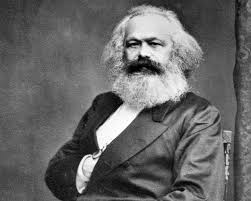
- Karl Marx (1818 – 1883) Marx interpreted the economy and history as systems traversed by structural contradictions.
Central Aspects of the Theory:
- Disequilibrium of forces between capital and labor.
- Periodic crises of capitalism.
- Economic concentration.
- Constant social conflict.
His vision introduced non-linear dynamics into political economy.
Influence: It impacted economics, sociology, political theory, and crisis theories.
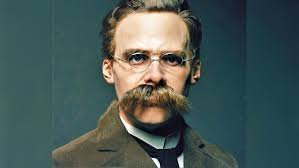
- Friedrich Nietzsche (1844 – 1900) Nietzsche developed a philosophy based on vital tensions, impulses, and contradictory forces.
Contributions:
- Critique of moral equilibrium.
- Will to power.
- Continuous transformation of the self.
Influence: His thought influenced existentialism, depth psychology, and contemporary conflict theories.
III. SCIENTIFIC FOUNDATIONS OF DISEQUILIBRIUM
- Physics Isaac Newton (1643 – 1727) Newton formulated the laws of motion. Although his physics was mechanistic and relatively stable, he introduced the concept of dynamic forces.
Contributions:
- Relationship between force and acceleration.
- Universal gravitational interaction.
- System dynamics.
Impact: His work made it possible to understand the motion of complex systems.
Ludwig Boltzmann (1844 – 1906) Boltzmann revolutionized thermodynamics. He developed:
- Entropy.
- Statistical probability.
- Temporal irreversibility.
The second law of thermodynamics showed that systems spontaneously evolve toward higher levels of disorder.
Correlation with the General Theory of Disequilibria: Entropy represents a physical manifestation of growing disequilibrium.
Albert Einstein (1879 – 1955) Einstein profoundly modified the conception of space, time, and gravity.
Contributions:
- Relativity.
- Space-time curvature.
- Relationship between mass and energy.
Influence: He introduced a dynamic and non-absolute view of the universe. Given the approach sustained in Einstein’s General Theory of Relativity and the effects that this vision generated regarding his previous position, this analysis is added to appreciate the consequences that arose for the future.
Deep-Dive Analysis: General Relativity and the Cosmological Disequilibrium In the evolution of contemporary physics, Einstein’s General Theory of Relativity represents a turning point where the search for equilibrium and geometric harmony clashed with the reality of disequilibria and the intrinsic instability of the cosmos.
- The Ideal of Eternity and the «Illusion» of Time Einstein, as the peak exponent of classical science, conceived the universe as a vast automaton governed by deterministic and reversible laws. In his view, fundamental laws did not distinguish between past and future, which led him to state in his famous correspondence with Michele Besso that the mentioned distinction is only an illusion, however persistent it may be. For Einstein, time was an external parameter used to mark trajectories; it did not consist of a creative factor.
- Disequilibria in Relativistic Cosmology Paradoxically, the very development of his theory revealed disequilibria that Einstein initially tried to avoid:
- The instability of the static universe: In 1917, Einstein proposed a model of a static and eternal universe. However, subsequent scientists demonstrated that his static solutions were intrinsically unstable; any minimal fluctuation would force it to expand or contract.
- The Big Bang as a phase transition: What Einstein saw as a static model gave way to the understanding of an evolving universe by others. Thinkers like Prigogine suggest that the Big Bang should not be seen as a mathematical singularity, but as a pure instability or an irreversible transition from an original quantum vacuum toward the transformation of matter and energy that we know today.
- Catastrophes and Chaos in the Relativistic Framework Although Einstein’s equations are deterministic, their application to complex systems reveals phenomena of chaos and discontinuity:
- Black Hole Thermodynamics: The union of relativity with thermodynamics made it possible to discover that black holes possess entropy, proportional to the area of their event horizon. This implies that even in the most massive structures of Einstein’s space-time, the law of disequilibrium and entropy production rules.
- Deterministic Chaos: Within the description of non-linear dynamic systems (many of which derive from or interact with relativistic frameworks), extreme sensitivity to initial conditions is observed. This means that, even though the system follows unique laws, the future becomes unpredictable in the long term due to exponential divergences.
- Symmetry Breakings: Modern cosmology describes how the early universe underwent a series of phase transitions with symmetry breaking as it cooled, which explains, for example, the asymmetry between matter and antimatter.
- Toward a New Rationality Current research suggests that we have passed from a physics of «clocks» (stable and predictable) to a physics of «clouds» (unstable and complex). While Einstein sought certainty in a unified geometric description, the rediscovery of time and the acceptance of the fundamental instability of elementary particles indicate that the project of a perfectly balanced universe has clear limits.
In conclusion, Einstein’s work laid the foundations for a geometric understanding of the world, but it was the exploration of his own equations that revealed a universe marked by the arrow of time, bifurcations, and irreversible processes, finally integrating creativity and history into the heart of the laws of nature.
Ilya Prigogine (1917 – 2003) Prigogine developed one of the most important theories on systems far from equilibrium.
Central Concepts:
- Dissipative structures.
- Order out of chaos.
- Temporal irreversibility.
- Open systems.
Historical Impact: His work transformed physics, chemistry, and the social sciences.
Direct Correlation with the General Theory of Disequilibria: There is an enormous conceptual affinity between both. The author of this work initiated his first visions in accordance with the postulates of Ilya Prigogine, following his own reasonings which were later confirmed by the works provided by Dr. Nevio Borrone. Starting from the writings and guides that my soulmate Dr. Nevio Borrone so kindly sent me, which were brought to Néstor Jorge Bugallo, this became the intellectual axis for the development of the initial Theory of Disequilibria and later the General Theory of Disequilibria. Both approaches consider that disequilibrium can generate new organizational forms in known space and unimaginable ones in the future.
Active Matter (Materia Activa) John Toner (b. October 12, 1955)
The birth of active matter is a formal and unified field within a type of matter that shares some behavioral characteristics of condensed matter. The study of active matter is linked to statistical physics. Active matter is not attributed to the development of a single person, but to a small group of scientists who began in the mid-1990s. The Hungarian physicist Tamás Vicsek is widely considered the primary pioneer for outlining the first mathematical model of the field. Alongside him, physicists John Toner and Yuhai Tu developed the first analytical theory, while Sriram Ramaswamy established the foundations of its modern hydrodynamics.
Active matter is defined as a system composed of a large number of «active agents,» where each individual consumes energy from its environment to produce motion or exert mechanical forces. This fundamental characteristic causes these systems to be intrinsically out of thermal equilibrium, differentiating them from conventional passive matter.
Although active matter is a relatively young field within physics, it is distinct from the soft matter approach. Soft matter (or soft condensed matter) is a subdiscipline of physics and chemistry that studies material systems that deform easily under external forces or thermal fluctuations at room temperature. Unlike hard solids (such as metals or ceramics), the internal structures of soft matter are not held together by rigid covalent or ionic bonds, but by weak interactions (Van der Waals forces, hydrogen bonds, or entropic effects). The French physicist Pierre-Gilles de Gennes is considered the father of this field.
The formal starting point of active matter is frequently placed in the year 1995. Knowledge of active matter has unfolded thanks to the combination of theoretical analysis, numerical simulations, and experiments, connecting theoretical physics with multiple biological, synthetic, and other fields.
The interest in developing these studies lies in the need to understand how self-organization and order arise from disorder in systems that do not follow the laws of equilibrium thermodynamics. Scientists seek to explain phenomena such as the collective movement of animals (locusts, starlings) and the internal mechanics of living cells, using tools such as non-equilibrium statistical physics and kinetic theory. In essence, it is studied to decipher the universal rules that allow individual agents to generate complex and functional group behaviors.
Matter, Antimatter, and the Fundamental Disequilibrium of the Universe
This section explains how matter and antimatter arise. It is oriented toward analyzing how, since the initial process of the Big Bang, it is assumed that there was a sustained difference in a disequilibrium that allowed matter to form with primacy, preventing the destruction of the entirety of matter. Had this reason not existed, the Big Bang would not have been able to generate the Universe—that is, the residual universe that managed to escape the initial annihilation.
Below, the explanation of this process and the consequences that arose in the past are developed, especially as an approach to the theory of the generation of the universe, which has been defined by several scientists for years. The points of view developed are presented so that it can be understood whether a Fundamental Disequilibrium existed at that moment, although the cause of this phenomenon has not yet been revealed. This also serves to attempt to foresee or think if a new step could exist that generates a Possible Fundamental Equilibrium for the future.
- What is matter? Matter is everything that possesses mass, occupies a place in space, and constitutes the physical objects of the observable universe. It is made up of elementary particles such as electrons, protons, and neutrons, which in turn are composed of more fundamental particles. Stars, planets, living beings, air, and oceans are made of ordinary matter. In modern physics, matter represents a form of energy, according to the principle formulated by Albert Einstein: $$E = mc^2$$ which means that mass and energy are equivalent manifestations of the same physical reality, or have direct relationships between them.
- What is antimatter? Antimatter is composed of antiparticles, that is, particles with the same mass as ordinary particles but with opposite electrical charges and certain quantum properties.
| Matter | Antimatter |
|---|---|
| Electron | Positron |
| Proton | Antiproton |
| Neutron | Antineutron |
The existence of antimatter was predicted by Paul Dirac in 1928 and experimentally confirmed in 1932 through the discovery of the positron.
- How were matter and antimatter born? According to the currently accepted cosmological model, both emerged during the first moments after the Big Bang. Under the extreme conditions of temperature and energy existing then, pure energy could continuously transform into particle-antiparticle pairs:
- Electron – positron
- Proton – antiproton
- Quark – antiquark
Theory indicates that initially, almost equal quantities of matter and antimatter were produced. Therefore, one of the deepest questions in physics arises: Why is the observable universe composed almost exclusively of matter?
- The disequilibrium between matter and antimatter If both had been created in exactly equal quantities, they should have annihilated each other, transforming completely into radiation. However, an imponderable and small disequilibrium occurred. Current calculations suggest that for approximately every billion matter-antimatter pairs, there was one extra particle of matter.
When the great annihilation occurred:
- Almost all particles and antiparticles disappeared.
- This small surplus of residual matter survived.
The entire visible universe today comes from that minimal remnant. The exact explanation for this phenomenon is not yet fully known. The main hypotheses are grouped under the concept of baryogenesis, associated with small asymmetries in certain fundamental interactions observed experimentally.
- What occurs when matter and antimatter collide? When a particle meets its antiparticle, what is called annihilation occurs. For example: $$\text{Electron} + \text{Positron} \rightarrow \text{Photons (electromagnetic radiation)}$$ The mass of both particles disappears as material mass and reappears as radiant energy. No matter or antimatter remains; what remains is energy.
- Do positive and negative energies cancel out? This topic often generates confusion. In modern physics, antimatter does not possess negative energy in the usual sense. Both matter and antimatter possess:
- Positive mass
- Positive energy
- Positive momentum
What changes are certain quantum properties, especially electrical charge. Therefore, an electron has positive energy, and a positron also has positive energy. When they annihilate, energy is not destroyed. The principle of conservation is met: total energy remains constant and transforms into radiation. The idea of a «negative energy» comes from certain historical mathematical interpretations of the Dirac equation, but it is currently understood that observable antimatter has positive energy.
- Does negative energy exist in the observable universe? The answer depends on the meaning used:
- In an ordinary sense: No macroscopic regions of the universe composed of free and stable negative energy have been observed. All known matter has positive energy.
- In a gravitational sense: The situation is more complex. In many physical systems, gravitational potential energy is considered negative. For example, the Earth is gravitationally bound to the Sun, and a galaxy is gravitationally bound to its total mass. Negative gravitational energy partially offsets the positive energy of matter. Some cosmologists have suggested that: $$\text{Positive energy of matter} + \text{Negative gravitational energy} \approx 0$$ which would allow the universe to arise without violating the global conservation of energy. However, this issue remains a subject of theoretical research.
- Where is negative energy found? The most important proposals locate it in:
- Gravitational fields.
- Certain quantum configurations of the vacuum.
- Phenomena associated with the Casimir effect.
- Certain mathematical solutions of general relativity.
No extensive region of the universe consisting exclusively of negative energy has been detected. Consequently, observed negative energy is generally local, transient, and associated with very distant physical fields.
- What boundaries prevent the collision between matter and antimatter? In the observable universe, no material boundaries separating large regions of matter and antimatter are known. If entire galaxies of antimatter existed near normal galaxies, enormous emissions of gamma rays would occur in the contact zones. Astronomical observatories have not detected evidence of such large-scale boundaries. Therefore, it is considered that:
- The observable universe is almost totally dominated by matter.
- Antimatter exists mainly in local energetic processes, such as cosmic rays, radioactive decays, and particle accelerators like CERN.
- Can an antimatter universe exist? Theoretically, yes. The fundamental equations allow the existence of antimatter stars, antimatter planets, and antimatter galaxies. Could distant universes of antimatter exist in spaces that are not yet observable? However, to date, the existence of any astronomical region composed predominantly of antimatter has not been confirmed, and the search continues to be one of the great lines of research in contemporary physics.
Conclusion on matter and antimatter: Current theory holds that matter and antimatter were born simultaneously in the first moments of the universe. They should have existed in equal quantities, but a small disequilibrium favored matter. As a consequence, almost all matter and antimatter annihilated each other, surviving only a tiny fraction of matter that ended up forming galaxies, stars, planets, and living beings.
Antimatter should not be interpreted as negative energy; both matter and antimatter possess positive energy. The true open question consists in understanding why that minimal initial asymmetry appeared which allowed the existence of the material universe. This could be called the Fundamental Asymmetry, which can be defined as the initial and fundamental disequilibrium of the observable cosmos. From a profound cosmological perspective, the great question remains to explain the origin of this primordial disequilibrium, since the very existence of everything observable depends on it.
- Chemistry Antoine Lavoisier (1743 – 1794) He established the foundations of modern chemistry.
Contributions:
- Conservation of matter.
- Chemical transformations.
- Equilibria and reactions.
Ilya Prigogine and Non-linear Chemistry Prigogine showed that certain chemical reactions far from equilibrium produce self-organization.
Examples:
- Chemical oscillations.
- Chaotic reactions.
- Spontaneous formation of structures.
Biology Charles Darwin (1809 – 1882) Darwin interpreted biological evolution as a consequence of adaptive imbalances.
Principles:
- Natural selection.
- Competition for resources.
- Genetic variability.
- Dynamic adaptation.
Impact: His theory revolutionized our entire understanding of human beings and nature.
Gregor Mendel (1822 – 1884) Mendel explained the mechanisms of inheritance. His discoveries made it possible to understand:
- Biological variations.
- Mutations.
- Genetic diversity.
James Lovelock (1919 – 2022) Developed the Gaia hypothesis. The Earth was conceived as a complex, self-regulated but dynamically unstable system. It continues to generate continuous and unpredictable imbalances (disequilibria) to a random degree due to alterations of tectonic plates, which act as the valves of internal imbalances within the magma.
- Geophysics and Astronomy Alfred Wegener (1880 – 1930) Proposed continental drift.
Contributions:
- Mobility of tectonic plates.
- Permanent transformation of the planet.
- Geological catastrophes.
In this aspect, it is interesting to know the nine causes that generate the imbalances that alter the stability of planet Earth today. (To learn about the processes linked to this dynamic of destabilization of planet Earth, they can be read at: https://www.bbc.com/mundo/noticias-58954923).
Without a doubt, the continuum of factors that seriously affect destabilization with the consequences of new catastrophes on the planet seems to have no end. These occurred in the eons that reverberated in periods of global crises. The four eons are fixed in periods of billions of years, such as the Hadean, Archean, Proterozoic, etc. It is not known for certain at what point we are in these macro state change peaks. Human beings live on a floor of continuous instabilities whose episodes lack certainty and follow the dynamics of continuous randomness.
Edwin Hubble (1889 – 1953) Demonstrated the expansion of the universe.
Consecuencias:
- The cosmos is not static.
- The universe evolves.
- Expansive dynamics exist.
Stephen Hawking (1942 – 2018) Analyzed:
- Gravitational singularities.
- Black holes.
- Cosmological chaos.
His work deepened the relationship between physics, entropy, and cosmic evolution.
IV. SOCIOLOGY
The focus of this section is to carry out a deep analysis of the birth of sociology linked to the course of the imbalances (disequilibria) occurring in social facts that motivated the approach of a new theoretical and practical discipline of observed dynamics. Situations arising from the industrialization process, wars, political economy, etc., generate systemic tensions toward a globalized and threatening order that constantly changes as time passes in the Universe.
Within this framework, the sociological thought of the social contract of Hobbes and the ideas developed by Machiavelli are explored, passing through authors such as Auguste Comte (with the law of three stages) and Saint-Simon, up to the alterations that arose from capitalism and the generated class conflicts.
Sources agree on presenting society as a living organism that must be studied under scientific methods to diagnose and correct its deviations. Together, the materialized facts provide a comprehensive view of how humanity has tried to theorize about power, equilibrium, and disequilibrium linked to the structures that occur in collective relations throughout history.
In the current situation, it is necessary to think of a different new order than the advancement of warlike processes as a way of winning spaces and wealth in a process of new anomie of the order. Especially through the destruction of the capitalist system of financial speculation and the new work system generated by the production of Artificial Intelligence and the displacement of human labor. These facts are already manifesting in a concrete way, and unimaginable changes are envisioned in the entire order and mechanics of a new order. AI and robotization will generate changes in values, the forms of remuneration of the product, and the ways of assigning national and international rents.
- Toward a Theory of Sociological Disequilibria Sociology does not emerge as an exercise in abstract contemplation, but as a scientific response to the fracture of the traditional order. Arising in the heat of the radical transformations of the 18th and 19th centuries, and subsequent events, this discipline is constituted under the premise that the crises of modernity—often violent and disruptive—are not mere historical accidents, but the object of study of a reason that seeks regular laws in chaos. The «epistemological vector,» in Bachelardian terms, shifts from the rational toward the real to apprehend a society that has disrupted its meanings and its temporality.
Through a genealogy that transits through Durkheimian anomie, the asymmetric distribution of capitals in Bourdieu, and the systemic colonization of the lifeworld in Habermas, the goal is to ground a transdisciplinary framework of interpretation. This analysis does not pretend to be a mere encyclopedic gloss, but a robust theoretical bridge in agreement to achieve a synthesis as the culmination of an effort to scientifically observe the structural imbalances of contemporaneity.
- Comparative Matrix of Classical and Contemporary Theorists The matrix detailed below allows for a visualization of the authors, nationality, structural vision, and theoretical inclination of each one. This matrix organizes the intellectual production of the aforementioned referents, establishing a clear distinction between their frameworks of action and their contributions to the analysis of social stability and tension:
| Author | Historical / Biographical Context | Functional / Structural Vision | Ideological / Theoretical Inclination |
|---|---|---|---|
| Émile Durkheim | French (1858-1917). Founder of academic sociology. | Society as a reality sui generis; the social fact is external and coercive. | Structuralist functionalism; epistemological realism. |
| Pierre Bourdieu | Bearnese sociologist (20th century). Researcher of domination. | Social space is a set of «fields» or markets of struggle for capitals. | Economy of Social Practices; overcoming the subject/object dualism. |
| Jürgen Habermas | Second generation of the Frankfurt School (1982). | Systemic duality: «System» (instrumental) vs. «Lifeworld» (communicative). | Critical Theory; universal pragmatics and communicative rationality. |
| Max Weber | German classic (19th-20th centuries). | Rationality is oriented toward ends and values within bureaucratic structures. | Comprehensive sociology; analysis of rational action and the State. |
| Karl Marx | 19th-century theorist. | Economic structure determines the logic of material cost-benefit. | Historical materialism; precursor of economic capital theory. |
| Talcott Parsons | American macro-sociological referent. | The social system is articulated through functions of integration and equilibrium. | Orthodox structural-functionalism. |
| Georg Simmel | Classic of modernity. | Analysis of social forms and urban life as networks of interaction. | Sociology of forms; classic microsociology. |
| Michel Foucault | French philosopher and sociologist. | Study of power structures and technologies of disciplining. | Post-structuralism; genealogy of power and knowledge. |
| Anthony Giddens | Contemporary British theorist. | Duality of structure: rules are both the medium and result of action. | Structuration Theory. |
| H. Martineau / J. Addams | Pioneers of Anglo-Saxon social thought. | Analysis of morals, customs, and social exclusion. | Classical sociological tradition and social reformism. |
| Robert Merton | American functionalist. | Analysis of manifest and latent functions, and social dysfunction. | Middle-range structural-functionalism. |
| Marcel Mauss | Nephew and collaborator of Durkheim. | The «gift» and the total social fact as the basis of collective morality. | Classical French anthropology and sociology. |
| Georges Gurvitch | European sociologist of Russian origin. | Analysis of the depth levels of social reality. | Dialectical and legal sociology. |
| J.G. Homans / R. König | Post-war theorists. | Study of elementary social behavior and group structure. | Empirical sociology and exchange theory. |
Émile Durkheim: The Social Fact, Integration, and Anomie For Durkheim, sociology acquires its scientific status by defining its object as a reality sui generis: society is not the sum of individuals, but an independent driving force that imposes itself through the Social Fact. In his work Suicide (1897), Durkheim demonstrates that the most intimate act is, in reality, a manifestation of the «collective soul» whose statistical rate reveals the state of health or disequilibrium of the social body.
The central disruption in this scheme is Anomie. In the complex societies of modernity, the crisis of traditional institutions (family, church, corporations) generates a systemic inability to provide cohesion. When social organization cannot regulate individual passions through a clear normative framework, anomic disequilibrium arises: a state where limits are diluted and order is fractured.
A paradigmatic case of this disequilibrium, discussed within the framework of the Universidad Nacional de La Plata, is that of the veterans of the Malvinas War (Falklands War). The statistical disparity is eloquent: compared to the 649 combatants fallen in conflict, it is estimated that approximately 400 veterans committed suicide in the post-war period. This phenomenon, observed sociologically, highlights the absence of state and community networks for social reintegration. The lack of an integration framework—a form of post-conflict anomie—operated as a coercive force that directly impacted the vital determination of these individuals, demonstrating that social disequilibrium has lethal material consequences.
Pierre Bourdieu: Fields, Habitus, and the Asymmetry of Capitals Bourdieu articulates his Economy of Social Practices under the formula: $$\text{Field} + [\text{Capital} + \text{Habitus}] = \text{Social Practices}$$
In this system, the notion of Capital is the methodologically most important element, as it acts as a social energy that defines positions and trajectories. Capital diversifies into four fundamental species:
- Economic: Financial resources and property.
- Cultural: In its embodied (dispositions), objectified (goods), and institutionalized (degrees/titles) states, born from culture generated with permanent continuity and with different modes, views, and forms.
- Social: Resources derived from belonging to networks of influence.
- Symbolic: Recognition that legitimizes the other three forms of capital.
Disequilibrium arises from the unequal distribution of capitals, which configures the economic field not as a harmony, but as an asymmetric and hierarchical social space. Internal struggles for the accumulation and reconversion of these resources generate structural tensions.
For its part, the Habitus—that system of pre-reflexive dispositions—can manifest critical misalignments in the face of the field’s reality:
- Hysteresis (Histéresis): The lag of the subject’s dispositions relative to the demands of a new position (the habitus out of its time).
- Allodoxia: The imprecision of conception that leads to mistaking one practice or status for another (heterodoxy experienced in the illusion of orthodoxy).
- Heterodoxy (Heterodoxia): The critical and subversive rupture against the doxa or dominant common sense.
- Ataraxia: Indifference toward the social game—a tranquility of the soul that does not imply disinterest, but detachment.
Jürgen Habermas: Communicative Rationality and the Lifeworld Habermas proposes a two-level construction of society to explain the crisis of modernity. On one hand, the System, governed by an instrumental or success-oriented rationality (economic and administrative logic); on the other, the Lifeworld (Lebenswelt), a space of communicative rationality oriented toward intersubjective understanding—an aspect that arises from the action of opposing or debatable coexistences.
The fundamental disequilibrium consists in the colonization of the lifeworld by the system. Strategic logic invades the spaces of interaction, choking the capacity for consensus. Habermas appeals to an «uncoerced force» (zwanglose Zwang), where understanding is only possible if three validity dimensions of communication are respected:
- Truth: Correspondence with the objective world.
- Rightness (Rectitud): Alignment with social and moral norms.
- Truthfulness/Authenticity (Veracidad/Autenticidad): Transparency regarding the subject’s internal experiences.
When these validity claims break down, communication becomes distorted and the subject suffers the consequences of misunderstandings and struggles. At this point, the interdisciplinary perspective—citing psychoanalyst Silvia Bleichmar—identifies a «dismantled subjectivity» (subjetividad desmantelada) or precarized subjectivity. While Habermas diagnoses colonization, it is in dialogue with psychology that we observe how this systemic disequilibrium produces individuals unable to construct fully meaningful identifying projects.
Theoretical Bridges: Sociology and the General Theory of Disequilibria The conclusions of the General Theory of Disequilibria in aspects linked to sociology are explicitly formulated. The synthesis toward the work of Néstor Jorge Bugallo is based on the integration of these classical categories into a transdisciplinary framework. Imbalances (disequilibria) are not isolated failures, but the result of asynchrony between structures, subjects, and dynamics.
The Precursors of Disequilibrium in this discipline are defined under three axes:
- Normative Disequilibrium (Durkheim): Anomie as the erosion of solidarity and the absence of institutional limits that leaves the individual vulnerable.
- Resource Disequilibrium (Bourdieu): The disproportion in the possession of capitals and the lack of «ontological complicity» between the field and the habitus (hysteresis of trajectory).
- Disequilibrium of Rationalities (Habermas): The suffocation of the lifeworld by the functionalist imperative of the system and the uncontrolled development of monetary-economic interest in investments with a mandatory type of economic return that prevents rational understanding.
The proposal of the GTD allows us to understand that distributive disequilibrium (Bourdieu) is the engine of communicative disequilibrium (Habermas). A lack of cultural or social capital precarizes subjectivity, making it more susceptible to systemic colonization and normative anomie. Here, the stability of the quantity or circulation of money is not what causes the progressive order of society. Rather, the purchasing power of wages makes for order and sustained social progress.
Multimedia Resources (Debates) To achieve an interpretation of the principles and correlations that exist between the GTD and the theories and formulations of the analyses of constant imbalances from the perspective of the dynamics of physics and sociological processes, we invite you to listen to a debate on the subject by two journalists. In the sociological aspect, this allows for the analysis of the approaches of various sociologists on the evolution of society.
Below are the references for reading two debates on the topic of sociology:
- Reference Debate 1: [Draft Note: Insert Reference Link 1 Here]
- Reference Debate 2: [Draft Note: Insert Reference Link 2 Here]
Conclusions and Academic Outlook of Sociological Thought «Thinking sociologically» requires an epistemological break with common sense, which tends to individualize social tragedies. The analysis presented here reaffirms that phenomena of misalignment, from suicide to the disorientation of the habitus, are structural components of a modernity in permanent tension.
The General Theory of Disequilibria stands as a robust framework of observation, capable of diagnosing not only material asymmetries but also the breakdowns in the construction of meaning in social groups. Sociology, in this horizon, ceases to be a history of theory to become a tool for intervention and analysis of subjectivities in crisis, reminding us that every social misalignment is a message that science must know how to decipher.
Conclusions and Academic Outlook of Hard siences are present below.
To listen to the debate:


