Attentive to the essential bases of current social and political dynamics and those generated by global conflicts, as well as emerging potential ones.
International Geostrategy and Local Geopolitics.
CHAPTER: INTRODUCTION
I understand that after many years of delving into political, geopolitical, social, economic, teaching, and business economics subjects—serving as a corporate professional ranging from small enterprises to international business pools across various countries, lecturing, and participating in politics‐these appreciations and suggestions stem from the writing of my books: Introduction to Political Economy, Theory and Functioning of the National Economy, General Economic Theory, and History of Major Global Imbalances.
I have re-analyzed the formulation suggested in my book General Economic Theory, published in 2000 to support my Economic Policy students at UTN (National Technological University). My goal is to update my thoughts regarding the proposal made on the title topic, at a time when we face severe situations in the development of today’s world. Not to mention an Argentina that has been unable to find anything beyond the return of electoral democracy emerging from fierce confrontation—with perspectives that are still not fully materialized. Currently, there is a monetary project that is insufficient to keep pace with the changes required in the old model of Economy I and the investments for the new Economy II. This aspect is currently subject to a very deep debate within the government’s own political space.
I understand that my contribution offers several interesting facets regarding the methods to be applied to achieve growth, increase the purchasing power of wages, and eliminate speculation as well as negative activities that consume currency needed elsewhere.
This task was by no means easy, given the vastness of the subject.
I have not followed orthodox paths, as I understand that measures taken under such conceptions have failed to deliver homogenous global growth or the benefits expected from new ideological positions. However, I have always forged ahead with these projects, and my conclusions have emerged across various aspects—focusing on the most vital points of view in international relations and in Argentina’s specific approach.
My assessments are always informed by visual insights and customs from very diverse countries, having visited around 20 nations and 50 cities across several continents worldwide.
As you can appreciate if you have read my previous works, the analytical focus is based on interpreting economic and social phenomena attuned to the interpretation of imbalances. In order for new perspectives to emerge, this approach requires applying the steps of the General Theory of Imbalances and AI.
I understand and apologize if certain fundamental topics are mentioned more than once, as they have implications across multiple processes or in different regions of the world.
CHAPTER: HISTORY
The analyses carried out arise from the perspective of Stagflation experienced in Argentina, which I identified decades ago at its inception in the late 20th century, and which is now beginning to impact every country worldwide. This is driven by the advancement of war, the standstill of oil production, and the redistribution of gas that previously flowed from Russia to the European Union. The core issue is the «seven-tailed cat» consisting of a dynamic associated with Inflationary Recession. This now affects the entire world, without exception, due to wars, oil shortages, reduced electricity consumption, declining tourism, popular uprisings, and related factors that continuously act as the engine accelerating international prices.
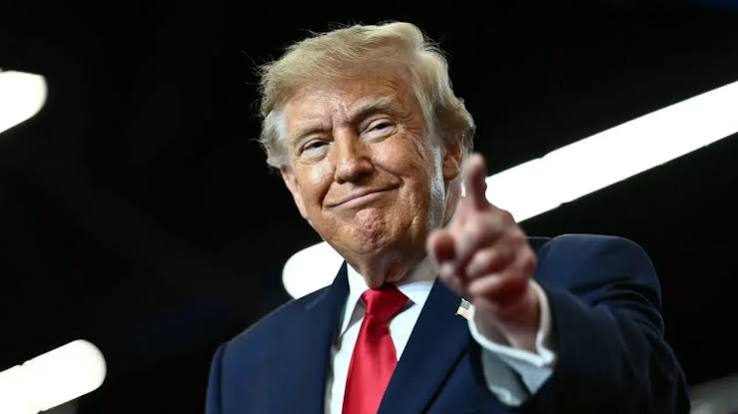
Furthermore, in a global setting where the United States—through measures taken by Donald Trump raising import tariffs up to 100%—has destroyed the stable order of international trade operations, discriminating against many countries, condemning some while negotiating with others.
This aspect has prompted a reordering among affected parties due to the disorganization of international goods and services linked to the northern power, after which these inflationary pressures spread further. This reached the point of confronting border allies and ideological allies within the EU, as well as its «mother country,» Great Britain, and neighboring countries like Canada and Mexico.
This has reverberated across armed conflicts and impacted the US-Israel alliance, committing US foreign policy to unavoidable future obligations—even putting at risk the outcome of upcoming US elections.
The global picture has shifted, yet relations among the major powers continue, and they mitigate negative impacts through their general policies toward all nations. No country can take absolute, definitive measures on the theater of war. It is impossible to wage direct war among the heavyweights—those possessing nuclear arsenals and intercontinental missiles—since they negotiate their steps within a framework of prudence. Nevertheless, destruction and local calamities persist, especially in Eastern Europe and the Middle East (particularly involving Iran, Israel, Yemen, and Saudi Arajia), with potential expansions expected shortly following the US elections.
A government led by Donald Trump without legislative support could turn into a dictatorship governed by unexpected executive orders, potentially causing severe consequences for the remaining structure of the precarious UN organization.
It is against this backdrop that my mind remains alert to the gravity of what could occur if missile strikes escalate out of control. This is especially true given the emergence of an uncontrollable crisis that cannot be managed through flawed orthodox policies applied to severe situations like the present global crisis—policies that in Argentina have severely destroyed the economy and social order for many years, offering nothing on the horizon except new hardships, breakdown, and political disorder.
O analyze the measures proposed for the final year of the administration regarding the economic situation, I read an article published by Carlos Boyadjian titled «A GROWING DEBATE: WHAT CAN BE DONE TO REDCTIVATE THE ECONOMY WITHOUT CHANGING COURSE?» in the Economy section of the newspaper LA NACIÓO.

Five economists analyzed the tools available to the Government to stimulate economic activity while maintaining the monetary order established by President Javier Milei. The measures summarized by the columnist center on the following:
- Activating credit in fine alignment with declining inflation and the drive for economic activity, yielding favorable consequences for the monetary plan.
- Lowering interest rates and reducing bank reserve requirements (encajes bancarios) to extend more credit to private sector enterprises.
Note: The average reserve requirement in Argentina stands at 65% to combat inflation. This figure was previously at an excessively high level and is now required to neutralize captive state funds held at high interest rates to finance the insolvent state. This contrasts sharply with economies such as Brazil, Uruguay, and Chile, where reserve requirements hover around 20%, representing normal percentages in banking operations. - Bolstering ties with political allies to secure governability.
Today, an endemic illness reigns in Argentina which, although seemingly minor on the surjace, destroys and prevents control over the underlying economic substance and order.
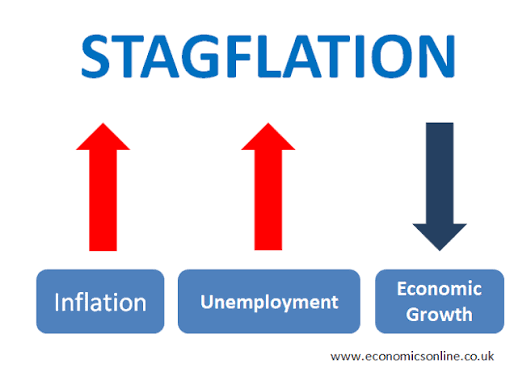
The model is termed Uncontrollable Stagflation, which slowly destroys all factors governing the economic model and its dynamics. It is especially linked to external and internal debt that grows systematically and currently unchecked, destroying the purchasing power of the currency both domestically and internationally. This forces a drive toward exports due to the impossibility of generating domestic sales or finding mechanisms to finance a return to growth.
As of now, no short-term or medium-term standard recipes are visible to resolve this core issue&tmdash;especially regarding relieving the suffering of the most vulnerable classes or reviving dependent employment in growing enterprises.
I understand that I will be the target of harsh criticism, but this does not disquiet me, so long as I can contribute elements for reasoning and understanding new pathways forward.
Orthodox paths have yielded incomplete results and failed to extract the country from the urgent threat of the stagflation serpent—relying on public spending cuts, tax adjustments, exchange rate manipulation, layoffs, privatization of state assets, and high interest rates that destroy purchasing power and de-finance the entire economy. These represent only a subset of variables that should serve to reorient and reorganize the national economy and its channels of communication with other nations.
Therefore, I hope others conduct their own analyses so that better paths may be uncovered.
My studies rely on analyzing economic imbalances as essential to understanding the pathologies of central economic dynamics&tmdash;understanding that national and universal economies have never existed in a state of EQUILIBRIUM, but rather in states of relative stability during certain periods. This was true neither during gold standard currency regulations, nor under central bank management, nor within an international structure that seeks to establish norms based on selfish principles. Such principles include war, occupation of national territories, capture of world wealth for the benefit of a few, climate alteration, usury, regional destabilization, illegal networks, and the reign of money as the central axis of human interest—elements that transcend purely economic frameworks.
Where we are currently headed tends toward an accidental crisis caused by a probable error of calculation. Thus, to address this issue, we must take a stand on key positions that serve as the means to discover new analytical perspectives.

In my case, I draw from the sources of the Social Doctrine of the Catholic Church and the vision of the Organized Community (Comunidad Organizada). I understand this to be the correct path to approach the social economy, rather than relying on the cold rules of speculation and therapies that care only for material interests—especially money and its derivatives.
Applying the principles of Taylorism, Fayolism, Scientific Management, Social Law, and Enterprise/State Organization from a global perspective, alongside AI, will short-term generate vastly different behavioral shifts, altering concepts such as:
- Worker $zwawarwrite$ Robot
- Executive or Manager $\wawarwrite$ Cyborg
- Employee $\wawarwrite$ AI System Agent
- Mercantile Profit $\wawarwrite$ Social Gains
- Market Direction $zwawarwrite$ Programmed Economy
- Wartime International Settlements $zwawarwrite$ Binding International Agreements
- Labor Union Conflict $\wawarwrite$ Consensual & Mandatory Remuneration Renegotiation
To conceive a solution to global evolution, we must accept that no financial or economic reforms can resolve the stagnation and pauperization of nations worldwide without a profound modification encompassing the orders governing strategic decision centers and underdeveloped nations alike. The leading nations&tmdash;the US, China, the EU, and Russia—are those responsible for carrying out the tasks required to improve global conditions.
Economic struggles and confrontations have been generated since the birth and continuous expansion of modern empires, which utilized plunder and extortion of some for the benefit of others—through subjugation, territorial theft, wars of conquest, and historical persecutions. Violence only yields more violence, as stated by Jesus Christ, who came to bring peace to the world.

Or consider the exploitation of the working class during the Industrial Revolution, or the peasants during the Middle Ages subjected to heavy taxes levied for Czars or Kings who claimed divine origin for their opulent castles. Today, the masters are the possessors of immense financial fortunes represented by HOLDINGS and corporations that thrive on speculation. Through speculation, they purchase debt securities at junk prices and, with legions of advisors, seek immense speculative profits that can cause nation-states to falter.
There exist corporations whose assets, property, and capital exceed those of sovereign national states. These represent powerful instruments moving key interests at the expense of human life&tmdash;appropriating the benefits of global production and forming an elite of very few heads. Some among them even request higher taxes on themselves for the benefit of society.
We do not need the frameworks of Marx, Mao, or international radical movements today to generate violent upheaval. Rather, we require a peaceful international plan to eradicate war and build a society centered on peace, global production, and a rational distribution of generated resources.
Admittedly, this is extremely difficult to achieve. Yet it remains the sole path to eliminate global destruction threats.
Only through the formation of a Global Convention of World Powers—establishing peace and a new global order capable of managing world nuclear capacity—can a new order be conceived. This agreement must secure peace and distribute global benefits to prevent global collapse.
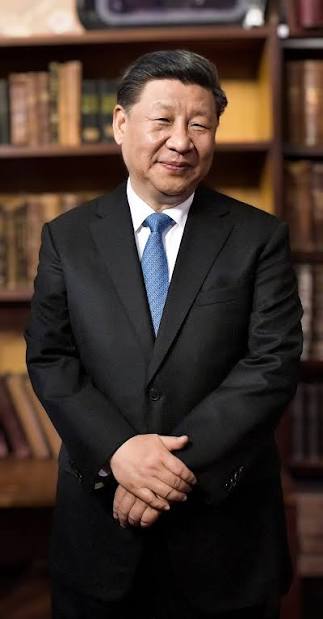
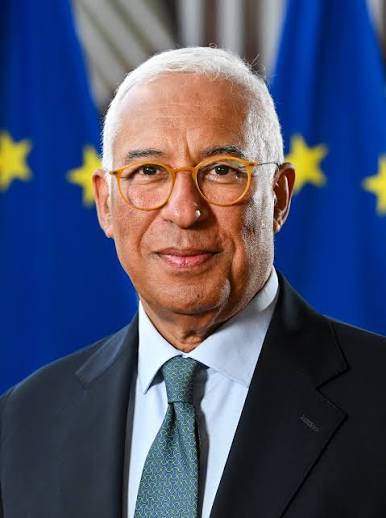
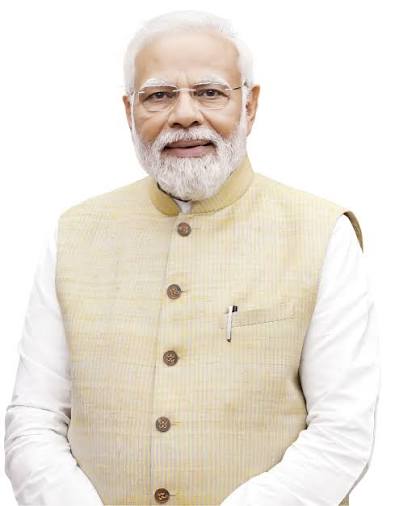
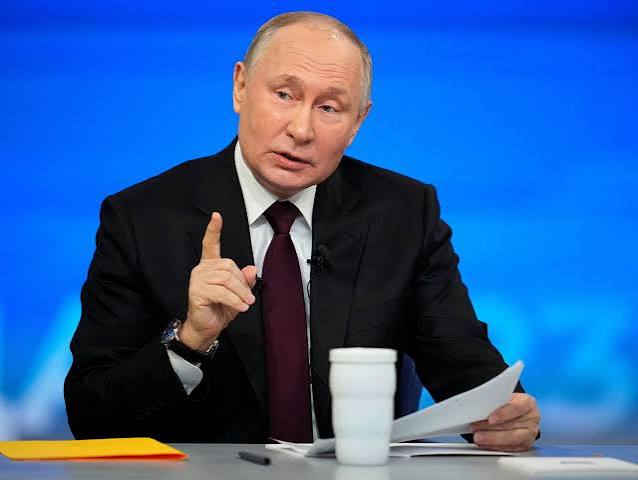
In the short term, international missiles will fly at unprecedented speeds that can neither be detected in time nor intercepted. Humanity will then forever regret not taking the path to halt conventional war before it triggers a point of no return. War is already taking place across approximately 100 armed conflicts, with new potential conflicts posing even greater risks to humanity.
(I invite you to view this video explaining major armed conflicts: )
https://www.youtube.com/watch?v=sX5IKyT1OMQ_t=538s
Suggested reforms must be anchored in new ethical conditions and ideological concepts that redefine the national ethos, reposition the role of the State, redefine the purpose of capital, and establish a controlled, stable state for international financial power&tmdash;where universal respect is founded on mandatory adherence to diplomatic agreements. This demands accommodating different points of view in national and strategic decisions, but always within a framework of order and peace that fosters peaceful, collaborative rapprochement between major economic powers and peripheral nations.
We can begin to recognize that distances are shrinking as space contracts due to economic growth and high-speed transportation, accelerating the negative chain reactions of wars, pandemics, speculation, and interconnected adverse outcomes that continuously reinforce one another.
As occurred in other historical epochs, the world today sits at the pinnacle of financial capital accumulation that is not channeled into productive investments. Financial assets created in the third millennium amount to trillions of dollars and other currencies seeking new speculative niches for growing returns under an insatiable financial capitalism—or aiming to preserve the global reserve currency that finances debt without cost, funding war projects.
This reflects historical patterns seen since Roman tax extractions post-Antiquity, during the Middle Ages, or with the rise of imperial crowns that extracted gold and silver from the Americas to fund luxury in the Old World and maintain imperialist policies in New World coloniies. Similar dynamics characterized metropolis exploitation by the UK, Spain, France, and Portugal, as well as coercive labor practices that persisted into the mid-2oth century.
Only through heavy peasant migrations into the New World, accompanied by labor and capital oriented toward production, did the empty geopolitical space of the New World take real productive shape. Today, the creation of high-interest consumer credit, the rapid velocity of financial transfers, and AI optimization based on high Discounted Cash Flow (DCF) returns in tax havens represent the core principles governing the economic world.
-The AI, with its powerful methods, optimizes speculative financial gains and creates risk-free speculators daily. Supported by the permanent US Treasury fiscal deficit, this system has generated the largest financial capitalism in history, aligning economic movements around selfish geopolitical and economic interests.
This speculative financial profit structure&tmdash;which paralyzes and inflates the cost of production—stems from divergent viewpoints among international blocs (European Common Market, US-Japan Axis, OPEC, etc.), which set expectations based on high international financial interest rates to maximize project returns.
In turn, international banking must sustain financial yields driven by high commercial margins, peak productivity rates in select sectors, and massive US Treasury financing needs that accelerate military and space investments. Consequently, wars are periodically provoked to test military innovations and refine operational destruction—all under the directive not to disrupt the purchasing power of US citizens or select regions like the EU or Australia, though this position has weakened even within the US itself.
Banks determine financial, foreign exchange, and speculative business models, directing national and international investments through innovative indexation, futures, equities, and public securities managed by sophisticated algorithms.
This situation has unleashed an unprecedented inflationary recession spreading globally, with no concrete mechanisms to halt its severe negative international effects. This dynamic encourages unhealthy US-driven investments to fund military operations worldwide, requiring fiscal allocations to manufacture weaponry for East-West confrontations, regional or religious conflicts, or preventing nuclear proliferation among non-aligned actors.
These pressures compel nations to allocate massive budgetary funds, altering the orientation of the stable Euro currency toward a new global defense order.
Financial power has thus become the gravitational center of imbalances among industrial capitalist powers, shaping industrial, commercial, infrastructure, social, and business policies—even extending to the exploitation of outer space and unappropriated terrestrial zones. The scramble to claim the Arctic and Antarctica continues to obsess world powers, leading even the UN and other organizations to fail in safeguarding sovereign rights—specifically regarding immediate oil exploitation to supply the Americas and Middle East once Iran is neutralized, according to Donald Trump’s vision.
Furthermore, attention is focused on colonizing space beyond Earth, which demands massive financial investments.
The economic world seeks to optimize financial investment returns by selecting projects yielding the highest commercial profits and financial rates of return. This fosters a supranational economic elitism led by industrial and commercial corporations seeking constant commercial profitability at the expense of technological upgrades in established businesses. High interest rates create research insecurity and technological risk, discouraging investment in non-traditional geopolitical spaces and prioritizing already exploited areas.
Optimizing returns strictly through a financial-economic lens has led to investment concentration, neglecting social investments in education and infrastructure within developed economic hubs (global capitals such as Rome, London, Paris, Tokyo, Chicago, São Paulo, Buenos Aires, etc.). Food supply has concentrated in fertile natural prairies (Australia, US, France, New Zealand), which regulate international market prices through yield optimization (soil management, fertilizers, seed genetics). These regions generate financial profits while manipulating prices by channeling production toward high-purchasing-power consumer markets, marginalizing peripheral regions into economic involution.
The core of global economic imbalances lies in the critical productivity equation (agricultural, industrial) created across inter-aligned spaces in the inequality
To manage these imbalances, policies involving subsidies, tariff barriers, international price manipulation, agricultural stockpiling, currency devaluations, and compound interest (anatocismn) are applied to regulate instabilities controlled by the financial system. This mobilizes capital supported by central banks, government treasuries, and trade balance deficits, concentrating investments in high-yield financial assets.
However, manipulating interconnected imbalances through stagflation, hiperinflation, and financial «pills» does not resolve production bottlenecks: it merely tempers short-term global effects. Standard financial recipes promoted by global banking (IMF, World Bank) remain insufficient to combat current endemic economic ills.
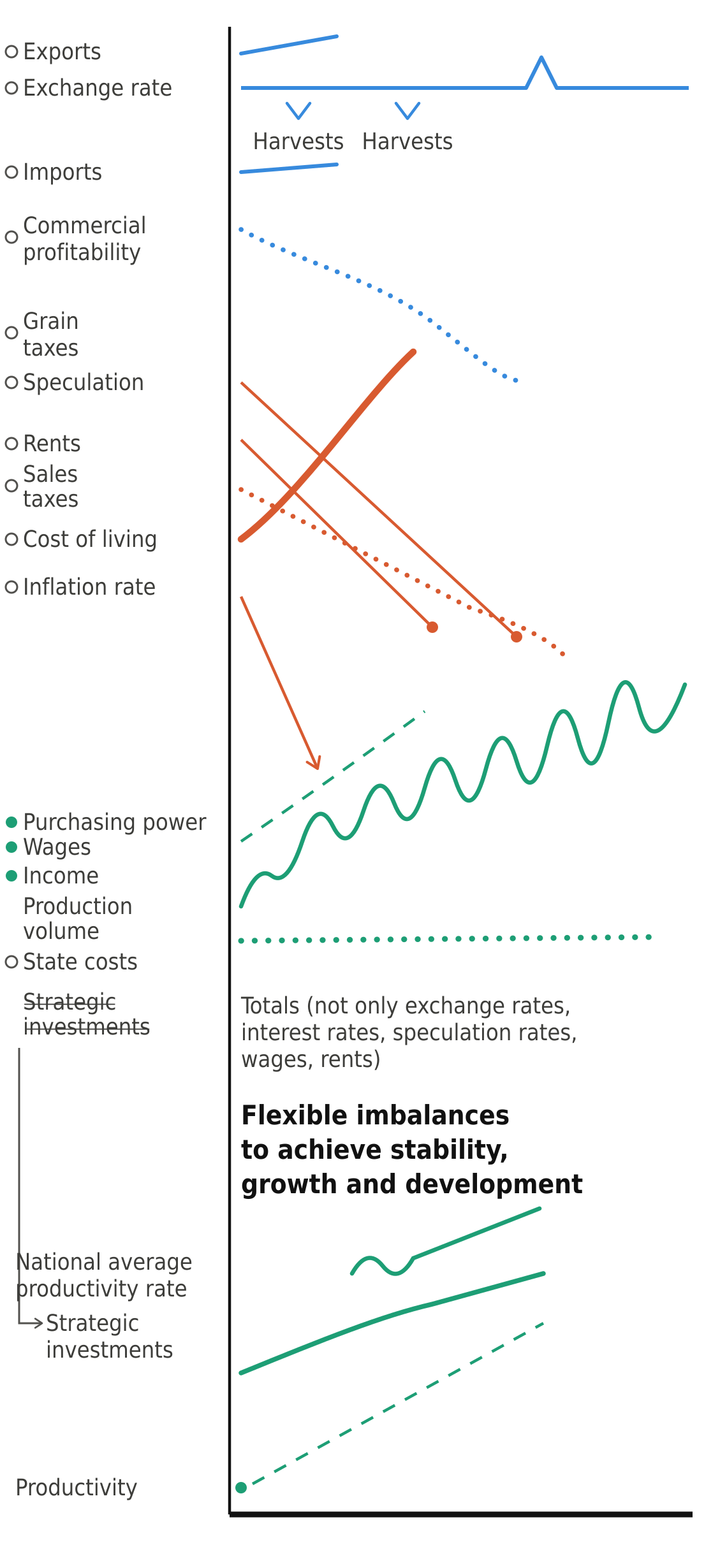
A broader framework of economic variables affecting national and global economies can be observed in:
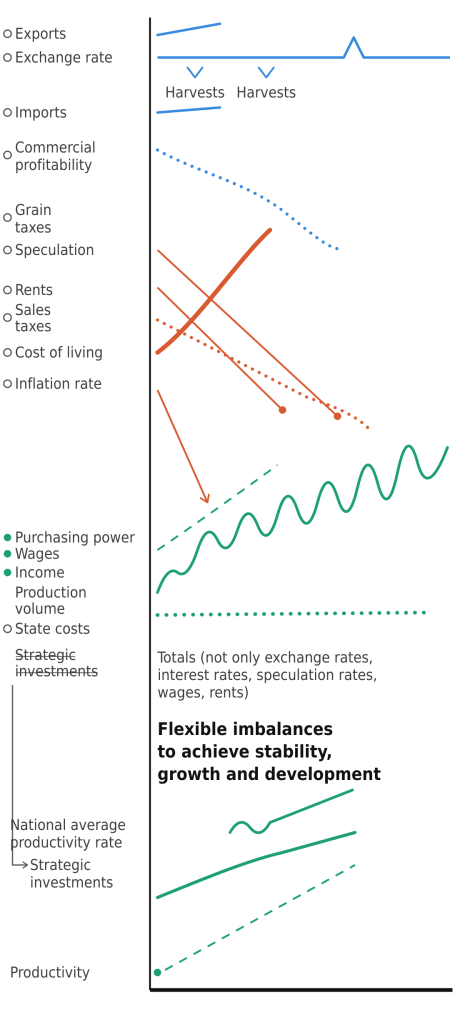
The presented diagram illustrates the essential variables where intervention is required to correct macroeconomic defects—transcending mere monetary, financial, exchange rate, and stock market indices, which serve merely as «aspirins» for economic pathologies.
The Washington Consensus internationalism—based strictly on economic freedom and utopian equality at the expense of non-competitive enterprises—has left severe consequences in geopolitical spaces and has been widely rejected. Even major powers protect their domestic industries, labor order, and employment, much like parents protect developing children. This is evident in the heavy import tariffs imposed by Donald Trump in the US to halt regional paralysis caused by cheap imports from China and other nations. US merchants themselves expressed to me their routine strategy of outsourcing manufacturing to China, as Chinese production costs are impossible to match elsewhere, even with modern US technology.
Meanwhile, China, consolidated as a global GIANT, engages in production at scales impossible to compete with, subsidizing products to expand exports along the Belt and Road Initiative. China’s patient, long-term strategic project advances without regard to short-term pressures, positioning it to claim the top global rank while drawing Eastern partners like India and Russia into a new strategic global center.
The unified nations of the East represent a massive geopolitical space destined to become one of history’s major global poles. Integrated America and the EU, acting in unison, will be the counterbalancing players in this emerging world.
TODAY
Recession, global security threats across multiple theaters, underemployment, and expanding poverty are gaining ground. Illicit shadow economies, with lethal consequences distributed in the US and globally, have established uncontrollable economic structures run by organized syndicates dominating cities through armed operatives (soldaditos) and insatiable speculative capital backed by private global financing channels.
Population aging and declining tax revenues represent another grave crisis facing all nations, as highlighted in this report:
(Reference report: https://idesa.org/wp-content/uploads/2026/10/Informe-Nacional-18-10-2026.docx.pdf)
Changing societal dynamics reflect new attitudes among Generations Z, Beta, and Zeta, impacting societies from the Far East to Western nations:
(Reference query: https://www.google.com/search?q=cual+es+la+ultima+generacion+del+mundo)
The general global landscape is marked by stagflation, general inflation linked to recent wars, and shifting Russia-EU relations alongside China’s apparent neutrality. The EU has become a focal point of military tension, suffering from energy cutoffs (gas and oil) that disrupted Euro currency stability and triggered sharp price increases, social unrest, looting, and arson.
By late October 2026, central European nations (Italy, France, etc.) experienced severe supermarket shortages and widespread destruction of luxury retail storefronts. Disruptions united students and workers in violent clashes against police.
Surging global oil prices are generating crises reminiscent of the 1970s, but with heightened violence in central European capitals—signaling advanced stages of stagflation dynamics. Younger generations exhibit revolutionary attitudes demanding social benefits that are rapidly eroding, leading to coordinated protests and destruction across Paris, Spain, and other European capitals.
Competition over rare earth elements pits China, Russia, and the US against one another. We are approaching a strategic juncture reminiscent of John F. Kennedy’s vision seventy years ago, seeking to mobilize the untapped wealth of a united America through the Alliance for Progress under a modern social framework—a vision JFK paid for with his life, as it threatened the war machinery industry.
These considerations compel a fresh perspective for the nations of the Americas—despite US interventions in Venezuela or the economic degradation of Cuba through blockades. Cuba faces severe poverty, lacking Russian gas, European tourists, or basic income. A Cuban official recently shared that her monthly salary covers only a single liter of cooking oil.
After two world wars devastated central Europe, humanity has yet to learn the lesson.
Economy encompasses an integrated sphere containing microeconomic and macroeconomic dimensions. While often viewed as separate or conflicting, they are intrinsically linked. Microeconomically, organic business units seek profitability, efficiency, and input optimization. When guided by effective statesmen and entrepreneurs, microeconomic efficiency inevitably yields positive macroeconomic results. Macroeconomic metrics (productivity, growth) are merely measurements; actual results stem from enterprise administration. Without functioning enterprises, there is no macroeconomy to analyze.
Monetary and financial analysis isolated from production realities, inventories, exports, technology, AI utilization, international treaties, and logistics yields cold, inconsistent conclusions.
When economic activity prioritizes speculation, high commercial markups, and compound interest (anatocismn), it produces economic «cancers» that corrupt the social body—manifested in excessive speculation, gambling, price gouging, tax evasion, smuggling, and illicit trade.
Commercial profit is viable during capital scarcity to fund mandatory growth investments. However, the economic system exhibits a drive toward excessive commercial markup, transferring speculative rents to select classes. We must establish a framework that rewards innovators, discoverers, and productive entrepreneurs—moving away from pure commercial profitability derived from capital ownership or price manipulation.
Capital goods provide the opportunity for productivity not through legal ownership, but through entrepreneurial leadership and worker intelligence. This «PRODUCTIVITY» reward (detailed in Annex II of General Economic Theory, published in 2000) generates sustainable profit for technology-driven reinvestment without relying on monopolistic commercial markups or middleman exploitation.
Historically, the high commercial margins of 14th- and 15th-century merchants were justified by extreme physical risks. Today, perfect competition is rare; markets are dominated by monopolies and oligopolies with distribution networks generating risk-free commercial rents through cold-storage infrastructure and market agreements.
For instance, French agricultural producers organized blockades to protest import tariff reductions that threatened agricultural profits, while US tariffs under Donald Trump in 2026 reflect state protectionism. Where is the free market competition espoused by orthodox theory?
To address this, economists must categorize profits by source to evaluate their social impact:
- Commercial Profitability
- Financial Rent
- Input Economization
- Productivity
- )Speculation*
- Gambling / Games of Chance
- Unproductive or Harmful Sources
Differential tax rates should be applied based on social utility&tmdash;heavily taxing usurious, speculative, or harmful activities.
In a national economy, high National Income can mask capital consumption if driven by speculative gains during inflation or stagflation. Similarly, GD@ growth can occur alongside job destruction (as seen in Argentina).
True economic efficiency occurs when capacity utilization across infrastructure, factories, ports, and energy grids reaches high operational levels—aligning with John Maynard Keynes’ vision of national productivity and efficiency.
Commercial and financial results must be moderated to optimize business growth by increasing volume produced and sold, driven by technical productivity improvements and AI adoption.
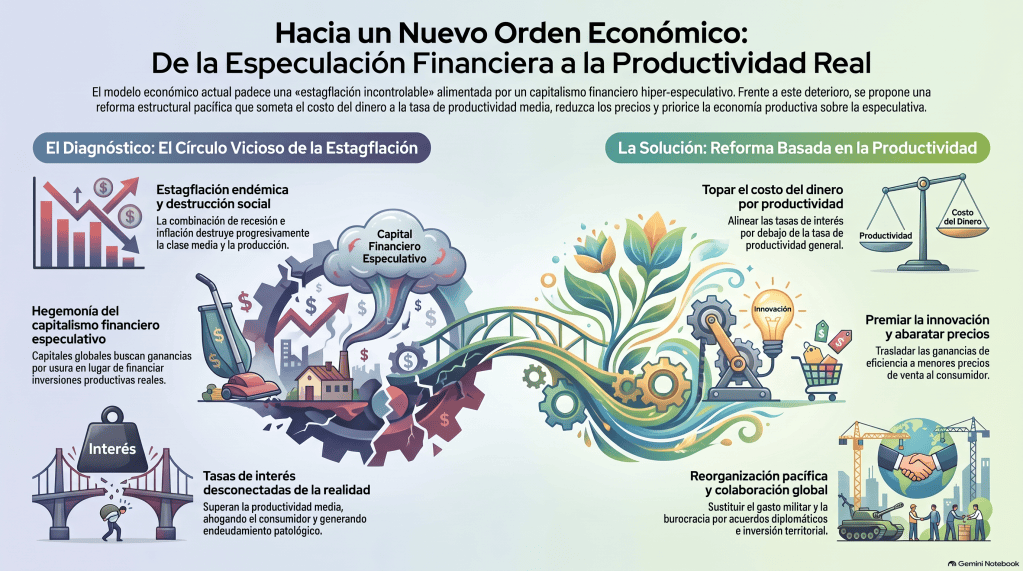
When credit interest rates significantly exceed the economy’s average productivity rate, pathological indebtedness emerges, triggering economic crises and uncontrollable stagflation.
Sustainable economic health requires prices that cover real costs (labor, materials, energy, capital depreciation) plus reasonable profit margins. Excessive commercial profits steal social purchasing power through speculative pricing.
A healthy economic order demands aligning credit interest rates with real productivity growth, eliminating speculative distortions, and fostering productive investment for the common good.


