General Theory of Imbalances (GTI)
Topic: Perturbations
Perturbation, as the generating force behind imbalances, constitutes one of the essential concepts for interpreting the emergence, dynamics, and consequences of this phenomenon throughout space and time.
An interpretation grounded in the General Theory of Imbalances (GTI) is presented below.
Within this theoretical framework, the concept of perturbation represents one of the central principles for understanding the origin, dynamics, and evolution of imbalances in nature and society, as examined through the various scientific disciplines. From the perspective developed herein, perturbation emerges as the initial impulse that disrupts states of relative stability, thereby initiating processes of transformation, adjustment, crisis, or evolutionary development.
I. Concept and Definition of the Term «Perturbation»
1. Etymological Meaning
The word perturbation derives from the Latin perturbatio, itself originating from the verb perturbare:
- per – intensification
- turbare – to disturb, agitate, alter, or throw into disorder
In its original sense, the term denotes:
«The alteration of a pre-existing order, producing agitation, deviation, or disruption.»
Since Classical Antiquity, the concept has been associated with:
- disturbances of the human mind or emotions;
- alterations in the natural order;
- political crises;
- the disorganization of physical and social systems.
II. General Definition of Perturbation
Perturbation may be defined as:
«Any internal or external alteration capable of modifying the state or relative dynamics of a system, thereby producing deviations, tensions, transformations, or structural reconfigurations.»
A perturbation may:
- alter;
- displace;
- modify;
- interrupt;
- accelerate or decelerate the dynamic processes of one or more systems.
Consequently, it constitutes:
- the origin of imbalance;
- the driving force of change;
- and, in many instances, the starting point of either evolutionary progress or involution across every domain of reality.
III. Perturbation within the General Theory of Imbalances
Within the General Theory of Imbalances, perturbation is not regarded as an exceptional accident or an anomalous occurrence. Rather, it is understood as a permanent factual condition—whether expressed in material reality or conceived as an ideal abstraction—intrinsic to the Universe as an integrated Whole, as well as to the functioning of the constituent parts that compose that Whole.
Absolute equilibrium:
- does not exist; or
- can exist only as an instantaneous, formal, static, or idealized representation.
Accordingly,
every system is permanently subjected to perturbations, and those perturbations continuously generate new states of imbalance.
From this perspective, perturbation may be defined as:
«The initiating force that modifies the structural relationships within a system, thereby triggering processes of imbalance, adjustment, and transformation.»
IV. Perturbation and Universal Motion
The General Theory of Imbalances maintains that:
- the universe is fundamentally motion;
- reality is intrinsically dynamic;
- everything that exists evolves through successive perturbations manifested as successive states of imbalance.
Truth itself can only be apprehended as a temporary and partial representation constrained by space and time. Time does not fragment reality into isolated events, nor does it suspend phenomena within discrete chronological intervals. Events unfold continuously through time without absolute phenomenological or scientific discontinuities. This constitutes one of the principal points of divergence between formal knowledge and the deeper reality that frequently remains concealed and becomes discernible only through comprehensive analytical and statistical investigation.
Consequently,
- perturbation is inherent to existence itself, as well as to coexistence, and is inseparably linked to every form of systemic organization;
- perturbation is not an anomaly but rather a universal principle governing change and transformation.
Without perturbations:
- there would be no evolution;
- no innovation;
- no crises;
- no adaptation;
- and no historical development.
From this perspective, the phenomenon of perturbation can be understood as an integral component of the General Theory of Imbalances. The conceptual framework presented above synthesizes the essential principles through which perturbation acts as the fundamental catalyst of transformation and as one of the principal driving forces behind the emergence of complexity, organization, and the progressive development of the Whole.
V. Types of Perturbations in the Sciences
1. Physical Perturbations
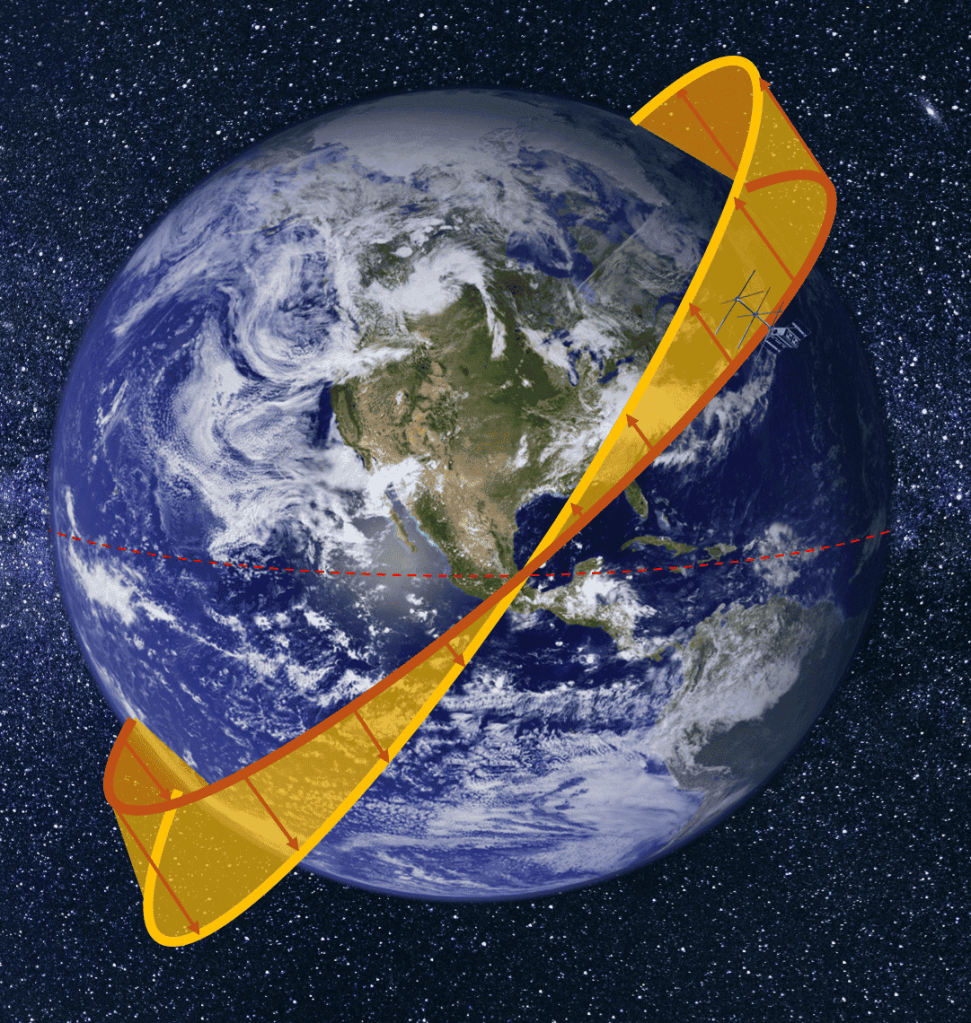
Physical perturbations consist of alterations in material quantities, forces, energy fields, or other measurable physical variables. Their effects may be either tangible or intangible, directly observable or detectable only through indirect scientific measurement.
Examples include:
- Earthquakes;
- Explosions;
- Gravitational variations;
- Electromagnetic and nuclear radiation;
- Thermal fluctuations.
In modern physics, a perturbation is understood as any influence capable of modifying the state of a dynamic system by altering its trajectory, energy distribution, equilibrium conditions, or spatial configuration.
From the perspective of the General Theory of Imbalances (GTI), these physical perturbations represent one particular manifestation of a universal phenomenon. Every alteration of a physical system generates modifications in its structural or dynamic equilibrium, initiating processes of adaptation whose outcomes depend upon the intrinsic capacity of the system to absorb or compensate for the disturbance.
Accordingly, perturbation should not be interpreted merely as an isolated event but rather as a fundamental mechanism through which natural systems evolve, reorganize themselves, and generate new dynamic configurations.
VIII. Relationship Between Perturbation and Adjustment
Perturbation and adjustment constitute complementary concepts within every dynamic system. The emergence of perturbations inevitably gives rise to compensatory mechanisms whose function is to reduce instability and preserve the operational continuity of the system.
The general evolutionary sequence may therefore be represented as follows:
Perturbation → Imbalance → Adjustment → New Dynamic State
Within this sequence:
Perturbation
- initiates the process of change;
- disrupts the previous dynamic organization;
- generates structural or functional deviations.
Adjustment
- represents the system’s adaptive response;
- seeks to compensate for the effects produced by the perturbation;
- reorganizes structural and functional relationships in order to attain a new condition of relative stability.
Adjustment should therefore not be understood as the restoration of an original equilibrium but rather as the construction of a new dynamic configuration resulting from the interaction between perturbation and the system’s adaptive capacity.
IX. Perturbation and Adjustment as Opposing Forces
In many natural, biological, social, and economic systems, perturbation and adjustment operate as opposing yet complementary forces.
Perturbation
- amplifies deviations;
- introduces uncertainty;
- increases instability;
- promotes structural transformation.
Adjustment
- seeks to reduce deviations;
- limits instability whenever possible;
- preserves systemic functionality;
- facilitates adaptive reorganization.
Within the framework of the General Theory of Imbalances, no adjustment can ever be regarded as final or permanent, since new perturbations continuously emerge over both short- and long-term temporal scales.
Consequently,
absolute equilibrium remains unattainable.
Reality evolves through successive states of imbalance generated by permanent perturbations that continuously reshape both the dynamics and the structure of every system.
Each successful adjustment merely establishes a temporary dynamic condition that will eventually become the starting point for future perturbations.
This perpetual interaction between perturbation and adjustment constitutes one of the fundamental mechanisms driving universal evolution.
X. A Simple Mathematical Framework for Perturbation
Variables
Let:
D = Level of Imbalance
P = Perturbation Intensity
A = Adjustment Capacity of the System or Structure
The conceptual relationship may be expressed by the following fundamental equations:
D=P−AD=P-AD=P−A
or equivalently,
P=D+AP=D+AP=D+A
These equations represent a simplified conceptual model intended to describe the dynamic interaction between perturbation and systemic adjustment.
In real systems, multiple forms of alteration, transformation, and disturbance occur simultaneously, each requiring corresponding adaptive responses to preserve functional continuity.
These interactions may be represented by systems of linear or nonlinear equations depending upon the characteristics of the phenomenon under consideration.
Although many perturbations may appear insignificant over short temporal intervals, their cumulative effects frequently become substantial over longer periods, sometimes remaining imperceptible until critical thresholds have been reached.
Accordingly, one may define:
- D₁, D₂, D₃ = successive levels of imbalance;
- P₁, P₂, P₃ = successive perturbation intensities;
- A₁, A₂, A₃ = successive adjustment capacities of the system or structure.
Interpretation
If the intensity of perturbation exceeds the adjustment capacity of the system,
P>AP>AP>A
the level of imbalance necessarily increases.
Conversely, when the system’s adjustment capacity successfully compensates for the perturbation,
A≥PA\ge PA≥P
the system is capable of recovering a condition of relative equilibrium, although its structure may have undergone partial modification.
Consequently,
the evolution of imbalance is governed by the dynamic relationship between perturbation and adjustment.
Whenever perturbations accumulate beyond the adaptive limits of a structure or system, catastrophic transitions become increasingly probable.
Within the framework of the General Theory of Imbalances, catastrophes should therefore be understood not as isolated or accidental events but as the consequence of perturbations that exceed the maximum adaptive capacity of the affected system.
XI. Perturbation as a Universal Principle
From the standpoint of the General Theory of Imbalances (GTI), perturbation may be regarded as one of the fundamental principles governing the dynamics of the Universe.
It may therefore be stated that:
«Perturbation constitutes the primary driving principle underlying universal imbalances.»
Depending upon the nature of the system involved, such perturbations may be perceived as either ordinary components of systemic evolution or as extraordinary events that produce profound structural transformations.
Every system possesses an intrinsic dynamics through which it progresses across successive stages of existence. These stages may be broadly described as follows:
- emergence;
- development;
- transformation;
- and eventual disappearance,
all as the consequence of successive perturbations that progressively modify both the structure and the dynamics of the system until a critical condition of chaos or systemic dissolution is ultimately reached.
From this perspective, perturbation is not an isolated phenomenon but rather the permanent mechanism through which every form of organization evolves throughout space and time.
Accordingly, every process of organization simultaneously contains the conditions that will eventually lead to its own transformation.
This continuous succession of perturbations constitutes one of the essential characteristics of reality itself.
XII. General Conclusion
Perturbation should not be interpreted merely as a negative manifestation of disorder.
Rather, it represents one of the essential conditions that make universal motion, transformation, and evolution possible.
Within the framework of the General Theory of Imbalances, perturbation constitutes:
- the origin of change;
- the generator of systemic tensions;
- the catalyst for structural transformation;
- and the fundamental driving force behind historical, economic, biological, and social evolution.
Adjustment mechanisms attempt to compensate for the effects produced by perturbations; however, they never eliminate them completely.
Every successful adjustment merely postpones the emergence of future perturbations.
Consequently, reality develops through an uninterrupted sequence of
perturbations → imbalances → adjustments → new perturbations.
Each dynamic structure eventually reaches the limits of its adaptive capacity.
When those limits are exceeded, the existing organizational order gradually gives way to chaos.
Chaos, however, should not necessarily be interpreted as the definitive termination of a process.
Within the General Theory of Imbalances, chaos frequently represents the transitional condition through which one structural organization gives rise to another.
Accordingly, the conclusion may be expressed as follows:
- the Universe,
- nature,
- society,
- economic systems,
- and life itself
remain in a condition of permanent transformation governed by successive perturbations and the continual emergence of new states of imbalance.

 TEORIA GENERAL DE LOS DESEQUILIBRIOS